


Why Millions of Us Are Still Cleaning Our Ears the Wrong Way — And the Simple Swap Thousands Are Making Instead
Most people reach for a cotton swab the moment their ear feels "full." Here's why that habit may be keeping you blocked — and what to use instead.
You know the feeling.
You get out of the shower, and one ear feels full. Muffled. Like there's a tiny wall between you and the rest of the room. You tilt your head, shake it, press your finger against it. Nothing.
So you do what almost everyone does. You open the drawer, grab a cotton swab, and go in.
For a moment, it feels better. Then the doubt creeps in: did I just push it further in?
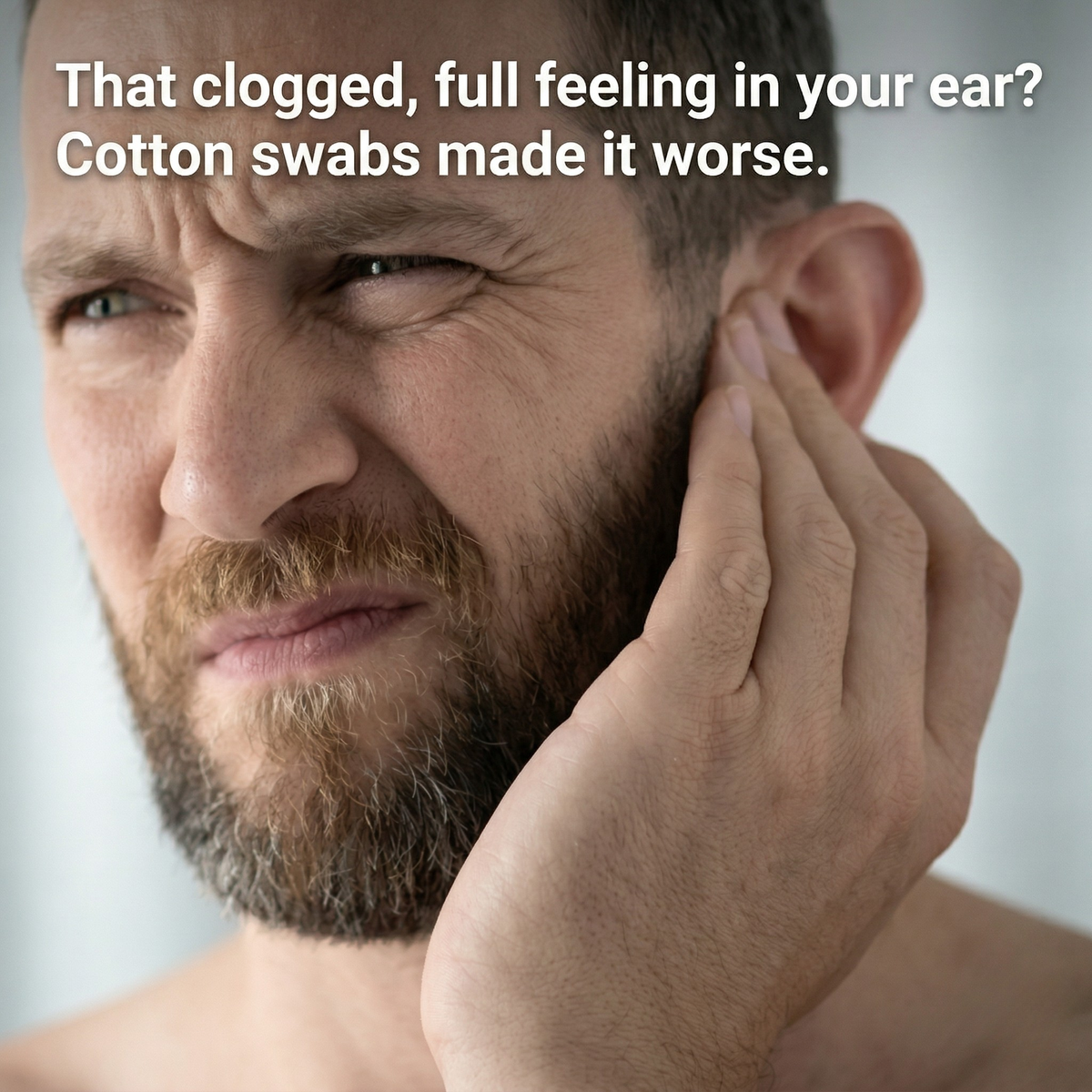
If that sounds familiar, you're far from alone. Cotton swabs are one of the most common things in the bathroom cabinet — and yet the boxes themselves tell you not to put them in your ear canal. Go and check yours. It's printed right there on the packaging.
The problem with the cotton swab
Here's the part most of us were never told: your ears are designed to move wax outward on their own. Earwax isn't dirt — it's a natural protective layer. Most of the time, it works its way out without any help.
The trouble starts when we "help."
A cotton swab is round, soft and slightly wider than it needs to be. When you push it into the ear canal, it can act like a plunger — some wax comes out on the cotton, but some of it gets pressed back and packed down. Do that every few days for years and it's easy to see how people end up with that permanent "full" feeling.
That's why ear-health organisations have warned against putting cotton swabs in the ear canal for years. The advice is usually: leave your ears alone, and if you're blocked, see a professional.
Sensible advice. But it leaves most people with an honest question:
"Then what am I actually supposed to use?"
The options most people try (and where they fall short)
- Cotton swabs — cheap and everywhere, but they can push wax deeper instead of removing it.
- Ear candles — popular online, but there's no good evidence they work, and they come with a real burn risk.
- Drops on their own — genuinely helpful for softening wax, but softening isn't the same as removing it.
- Clinic microsuction — the gold standard for a serious blockage, but it means booking an appointment and paying every time.
What people actually wanted was simple: something you can use at home, that lifts wax out instead of pushing it in — and lets you see that it's worked.
The swap: a stick that grabs instead of pushes
That's where a small, surprisingly clever tool has been quietly taking over people's bathroom drawers.
Instead of a cotton tip, it has a soft, gently adhesive tip. You don't scrub or dig. You insert it gently into the outer part of the ear canal, give it one slow turn, and draw it out. Loose wax sticks to the tip and comes out with it — rather than being shoved back in.
And here's the bit people can't stop talking about: you can see what came out. No guessing. No "did that do anything?" It's right there on the tip.

Then you just rinse the tip under the tap, let it dry, and it becomes sticky again — ready for next time. One stick lasts for weeks.
How it compares
| Cotton swab | Clinic visit | Sticky stick | |
|---|---|---|---|
| Lifts wax out instead of pushing in | ✕ | ✓ | ✓ |
| See what came out | Rarely | ✓ | ✓ |
| Use at home, any morning | ✓ | ✕ | ✓ |
| Reusable | ✕ | — | ✓ |
| Handles deep, hardened blockages | ✕ | ✓ Best | Not designed for |
| Cheapest upfront | ✓ Best | ✕ | Mid |
Honest take: if your ear is badly impacted or painful, see a professional. For everyday upkeep, the sticky stick is the one most people stick with.
So what's it called?
The one that's been selling fastest is the Earclear Sticky Ear Cleaner — and it's built up thousands of customer reviews, mostly from people who'd used cotton swabs their whole lives.

Here's why people say they made the switch:
- It works with your ear, not against it.The adhesive tip lifts loose wax out as you withdraw — instead of packing it further in.
- You get proof every time.You see the result on the tip. That alone ends the "did I just make it worse?" guilt.
- It's gentle.Soft tip, one slow turn, no scraping or digging. Reviewers keep saying there was no discomfort at all.
- One stick lasts for weeks.Rinse, dry, reuse. No more buying swabs every month.
The 2-step method that gets the best results
Earwax varies a lot from person to person. If yours tends to be dry or stubborn, the brand itself recommends a simple routine:
- Soften first (2–3 days).Use a few earwax softening drops for 2–3 days to loosen the buildup.
- Then lift it out.Insert the stick gently, one slow turn, pull out. Rinse the tip and repeat on the other ear.
That's it. Most people then use it as a quick part of their morning routine.
What customers are saying
Ready to ditch the cotton swabs?
Earclear Sticky Ear Cleaner
- Adhesive tip lifts wax out — doesn't push it in
- See the results on the tip every time
- Rinse & reuse for weeks
- Ships next business day · standard delivery 5–7 business days
- Add softening drops at checkout for the 2-step method
Frequently asked questions
Does it hurt?
It shouldn't. The tip is soft and you only insert it gently into the outer canal, turn once and withdraw. If you feel any pain, stop.
How is this different from a cotton swab?
A cotton swab can push wax further in like a plunger. The adhesive tip grabs loose wax so it comes out with the stick when you withdraw.
How many times can I reuse it?
Rinse the tip under running water and let it dry — it becomes sticky again. Customers report using a single stick for several weeks.
What if I don't see much on the tip?
Everyone's earwax is different, and some people naturally have very little. If yours is dry or stubborn, use softening drops for 2–3 days first.
Is it suitable if my ear is badly blocked?
It's designed for everyday upkeep of loose wax. If your ear is severely impacted, painful, or you have any ear condition, see a healthcare professional.
How fast is shipping?
Orders ship the next business day. Standard delivery takes 5–7 business days, with faster options at checkout.
